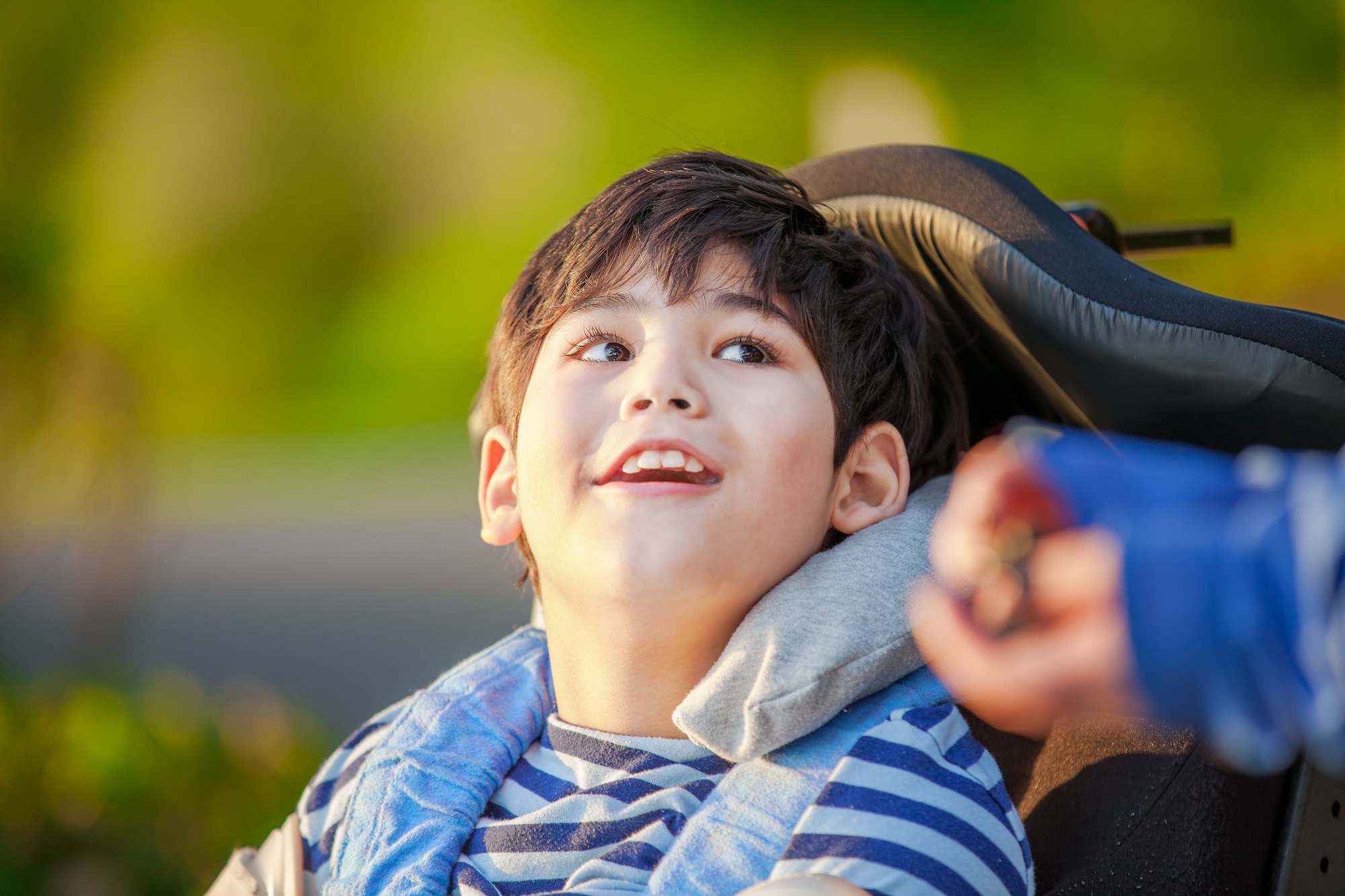
Specialised therapy plays an important role in improving movement, independence, daily activities and quality of life for children with cerebral palsy.
Physical therapy should usually begin within the first few months of life once the diagnosis of cerebral palsy is suspected. A physical therapist improves the development of the large muscles of the body, such as those in the legs, arms and abdomen. They use specific sets of exercises to help the child learn to stand, walk, use a wheelchair. Neurodevelopmental therapy is fast becoming popular and forms the mainstay of therapy.
It is used to decrease spasticity, strengthen underlying muscles, and teach proper or functional motor patterns. These exercises help in preventing musculoskeletal problems. Also, physical therapy will help avoid contractures, in which muscles become fixed in a rigid, abnormal position.
An occupational therapist helps in development of fine motor skills and activities of daily living. They specialize in improving the development of the small muscles of the body, such as the hands, feet, face, fingers and toes. These therapists also teach daily living skills such as dressing and eating, as well as making sure children are properly positioned in wheelchairs.
They may teach your child better or easier ways to write, draw, brush their teeth, dress, and feed themselves.
Early detection and intervention is the key to maximal recovery of child from aspects.
If they are treated as early as few months of their age these kids can be near to normal! For this the most important role is played by their parents/care takers who need to be aware of the possible risks their child can face.
Physiotherapy plays an important role in the treatment and rehabilitation of all paediatric cases like cerebral palsy, Down’s syndrome, spinal cord injuries etc.
Physiotherapy treatment gives optimum results with early intervention. In all the paediatric cases there is delay in developmental milestones like head holding, sitting, crawling and walking. With early physiotherapy intervention the child will be highly benefited as proper physiotherapy techniques help them achieve these milestones quicker which otherwise can take longer or does not develop at all.
Some of these milestones are absolutely essential for survival of the infants like sucking reflex, rooting reflex etc. Infants will not be able to take the feeding from mother if these reflexes are absent. Patients with low tone, spasticity, dystonia, athetosis benefit largely with physiotherapy to become independent in their day to day activities.
All the suspect cases like birth trauma, low birth weight, birth asphyxia, aspirations etc. should therefore be referred to a physiotherapist for monitoring the development of child and give necessary counselling to the parents. In this way, physiotherapy treatment can be started early.
Even though physiotherapy is not perceived as an emergency medicine it is still a very important method of treatment and with the advancement in treatments like neuro-developmental techniques, sensory integration along with exercise therapy it will definitely help to improve the quality of life and make the child independent in the future.
Parents of children with special needs are always faced by multitude of questions. Why is my child not able to move like other children? Why did this problem occur? Will this problem increase further? Will he be cured? When will my child start walking? What can I do as a parent to aid his development? Once the diagnosis of Cerebral Palsy is made, first and foremost recommendation to the parents is Physical therapy.
Cerebral Palsy is a condition which occurs due to insult to an immature brain, where the child has difficulty to coordinate the movements of body and control his/her posture. It is important to notice that, although the lesion in brain is permanent and will not change, the consequences of the lesion do change over a period of time as the child grows. Physical therapy program is directed to make the child as independent as possible.
Over years, there have been advances in the field of physical therapy for children with Cerebral Palsy. At present, Neurodevelopmental Treatment Approach is the most commonly used model of treatment for children with Cerebral Palsy.
The approach is unique by the virtue that it looks at the child as a ‘whole’. That means the treatment is directed not only towards physical independence, but it also targets child’s emotional, social, sensory, perceptual aspects so that he or she becomes an active member of the society and can fulfil his duties like any other individual.
Treatment by the approach does not stop at achieving physical improvement; but assures that the child is able to use the same to accomplish his age-appropriate roles e.g. a 4 years old child is expected to eat by self, play with toys indoors and outdoors, attend school so on and so forth. All these deeds are called as ‘functional activities’ and the ultimate goal of NDT is to optimize these functional activities.
For convenience, this treatment is divided into three specialities. Physical therapists, Occupational therapists and Speech & Language therapists, all provide a NDT based treatment intervention.
Physical therapists target the child’s ‘gross motor’ abilities i.e. to be able to sit, stand, walk; to be able to transfer self from floor to chair/car and vice versa.
A program of Occupational therapy based on NDT helps to improve ‘fine motor’ function, the ability to use hand to hold and manipulate different objects, toys, crayon etc. OT also helps to improve quality of eye function, sensation and perception. OT also trains the child for Activities of Daily Living like bathing, dressing, feeding etc.
Speech and Language therapists work towards quality of breathing, phonation, eating, drinking which are important for development of speech.
Evaluation and treatment goes hand in hand. Therapists evaluate functional abilities and impairments and work with parents to establish meaningful goals.
Therapists often use manual handling during treatment and adaptive equipment like balls, bolsters and benches to make movement easier, safe and enjoyable.
Repetition is important for learning a new movement and the therapist gradually decreases her control so that the child is required to take over. Parent and caregiver training is also an important part of the home management program.
Treatment session generally lasts for an hour and the frequency is decided according to the problems of the child. A severely involved child will benefit from 5 days a week treatment sessions whereas for a mildly involved child, twice a week could be sufficient.
A home management program is always given to the parents, so that whatever the child does throughout the day happens in a therapeutic way. To conclude, although NDT approach cannot ‘cure’ your child with Cerebral Palsy, it can help improve quality of life by optimizing function.
Common visual problems associated with cerebral palsy include impaired acuity of vision, visual field limitations, strabismus, rare anomalies like cataract and glaucoma, and visual-perceptual problems.
Vision is a very important sense. During therapy vision exercises are usually performed through play and all movements of eyes are achieved very easily. Vision helps in other milestone development like crawling, walking and hand functions.
With lazy eyes the child may not have depth perception and proper awareness of space. This may hamper walking, climbing stairs up and down. School going cerebral palsy kids may have problems copying from the blackboard or reading fast.
Visual perception problems are very common among kids. For example, if we show a part of an animal and ask which animal’s part it is, the child may not be able to visualize the complete animal and tell the name.
Vision therapy helps a lot in cerebral palsy kids. Regular follow-up visits for assessments and steps for improvement of visual problems play a key and supportive role directly or indirectly.
Good visual acuity and wide field of vision are basic requirements and supportive to improve mental and physical abilities and adjustment with surroundings.
Cerebral palsy kids usually have problems in fine hand functions and in-hand manipulations. Fine hand functions like use of pointing finger for any activity and activity with more wrist movements require proper training.
Parents and therapists should concentrate on hand functions alongside milestone development such as walking. Activities include manipulating small objects, using both hands effectively and shoe lace tying.
Children with cerebral palsy show oral motor problems like drooling, not chewing food effectively, swallowing and sucking problems. Some children have over-sensitive and some less-sensitive oral motor areas.
Depending on the case, therapy may involve desensitisation or stimulation of the oral motor area. Children with expressionless faces may also be taught to use facial muscles.
A speech and language therapist helps develop better control of the jaw and mouth muscles, which can improve speech and language skills and eating abilities of children with cerebral palsy.
They will teach both parents and child talking, using sign language, or using a communication aid.
Children who are able to talk may work with a speech therapist on making their speech clearer, or on building their language skills by learning new words, learning to speak in sentences, or improving their listening skills.
Children who cannot talk may learn sign language, or how to use special equipment such as a computer that actually talks for them.
Orthotics is an additional help to physiotherapy pre-surgery and post surgery to provide stability to CP kids when standing and walking. It is a kinesthetic reminder that provides sensory and visual feedback to help the patient adapt a more corrective or appropriate position.
The correct orthosis for the correct period of time with physiotherapy yield best results.
Ground Reaction AFO. Commonly used in cerebral palsy post surgery, diplegia-crouch or flexed knee gait, hemiplegia and acquired brain injury.
Solid Ankle Foot Orthosis. Used for night splinting, maintaining ankle neutral in post-surgical cases and preventing ankle tightness.
Dynamic Ankle Foot Orthosis. Allows controlled ankle motion and may be worn throughout the day in weight-bearing functional positions.
Supra Malleolar Orthosis. Provides control of the foot sideways while allowing ankle movement.
Posterior Leaf Spring AFO. Indications include flaccid foot drop and mild spasticity.
Knee Ankle Foot Orthosis. Stabilizes and allows movement at knee, ankle and foot where additional knee stability is required.
Hip Knee Ankle Foot Orthosis. Provides stability and movement control at hip, knee, ankle and foot.
Orthotic management using AFO is a critical part of rehabilitation pre and post surgery. Controlling ankle joint motion produces an effect on the knee joint as well during walking. By using an AFO to manipulate ankle movement, alignment and balance can be improved in functional positions like standing and walking, helping improve functional independence.