

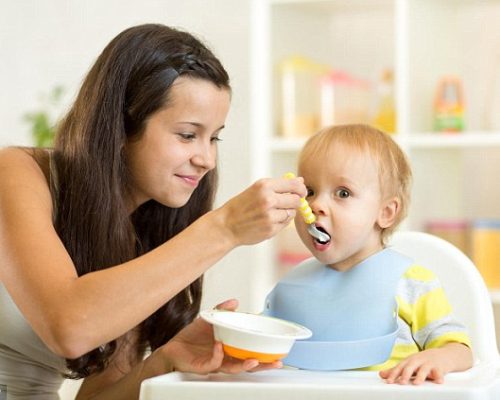
Many children with CP have eating and drinking difficulties. They have in-coordinated oral movements causing the eating to be slow and there is excessive spillage. These children also have difficulty in swallowing.
Hence some children need to be given only mashed food. They also suffer from many vitamin deficiencies. The dietician can advise on the best kinds of food to give them.
The physiotherapist will concentrate on the best positioning of your child. The speech and language therapist can advise on the best ways to achieve a good chewing pattern and mouth closure.
The occupational therapist can advise appropriate feeding equipment and seating. It is important that the child sees the food that he is going to eat and also the spoon from which they are going to eat.
Sometimes special spoons can be used so the child can learn to eat on his own. Sometimes the child is so severely involved that a tube has to be passed through the nose for feeding or a feeding gastrostomy or jejunostomy has to be performed.
Feeding difficulties should be assessed by the appropriate healthcare and therapy professionals so that nutrition, swallowing safety and independence can be addressed appropriately.